Food Inspection
As human civilization and technology advance, the food and beverage industry continues to move toward greater refinement, diversity, and globalization. What reaches the dining table is no longer just about taste, freshness, and health; factors such as local agricultural sourcing, storage and transportation, and food safety must also be carefully considered and rigorously controlled. Processing, packaging, and logistics industries now face increasingly stringent food safety requirements. Both consumers and regulatory agencies demand real time, reliable, and quantifiable foreign object detection capabilities.
Beyond visible light inspection, X ray imaging has become a major detection method. By identifying differences in appearance and density beneath packaging materials, X ray systems can easily detect foreign objects hidden inside food. These include:
1.
Debris from production equipment or packaging materials: Fragments or detached components such as metal, rubber, plastic parts, or glass splinters generated during processing may fall into the product or packaging, posing health and safety risks to consumers.
2.
Natural foreign materials in food ingredients: Bones, cartilage, fishbones, scales, etc., remain long-standing challenges for food processing. For example, bone fragments created during meat cutting/portioning, and residual fishbones or scales in seafood processing, are critical inspection targets today.
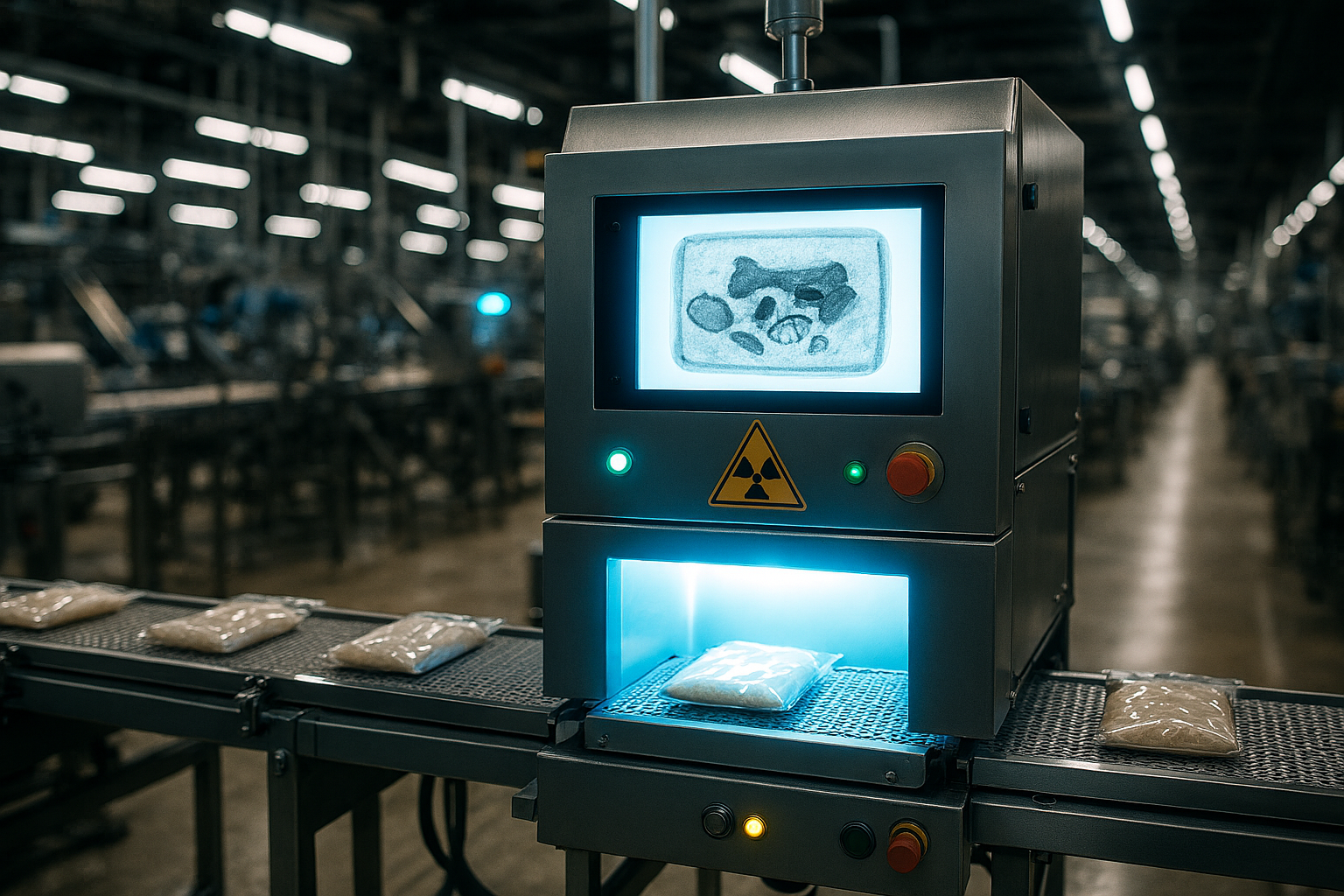
The core need of the industry is the ability to accurately differentiate foreign materials of varying composition at high production speeds especially bones and other low density substances. Compared with common metal contaminants (aluminum density > 2.7 g/cm³) and rubber (~1.8 g/cm³), natural foreign objects are primarily composed of calcium. Bone, for example, has an average density of ~1.7 g/cm³. Although this is higher than muscle or fat (~0.9 g/cm³), allowing good contrast in X ray images, practical detection on production lines remains challenging. Common issues include:
Low detectability of bones and low density materials
Bone density is higher than muscle, but certain areas (bone ends, small fragments) may lack of contrast.
Scales, insect remains, thin rubber, and plastics have low effective atomic numbers, resulting in minimal contrast in X ray images.
High production speeds limit optimal imaging and processing
Short exposure reduces contrast and signal to noise ratio.
Increasingly complex product shapes and packaging
Multi layer materials (aluminum film, plastics, paperboard) introduce scattering and false positives.
Complex internal structures can lead to misinterpretation of density and thickness.
Insufficient resolution and sensitivity of equipment
Traditional detectors cannot simultaneously achieve high frame rates and high resolution.
To address these problems, industries have explored various imaging and processing techniques. The following summarizes commonly used methods along with their pros, cons, and suitable application scenarios:
Computed Tomography (CT)1
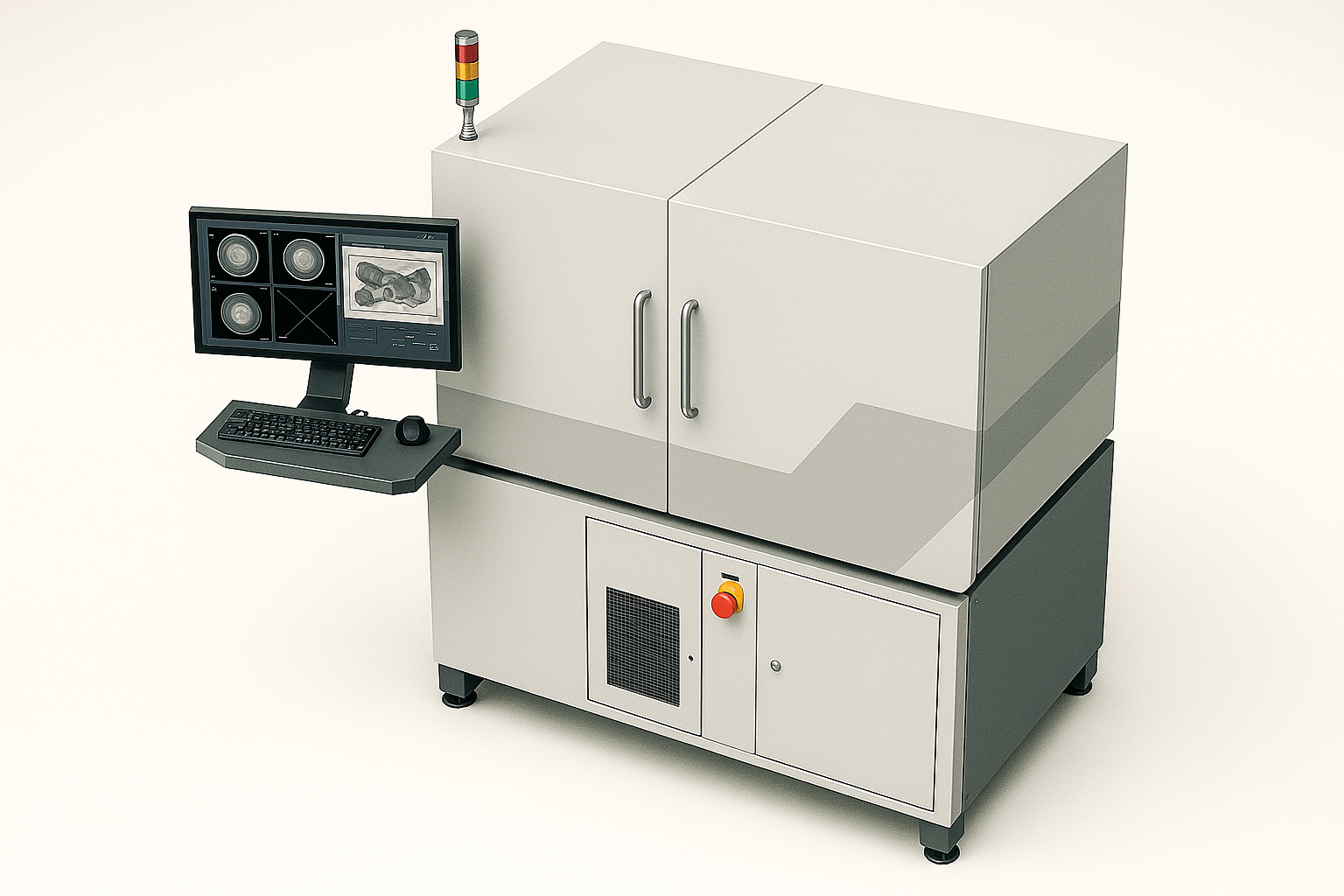
Offers clear differentiation of internal structures and materials.
Allows direct separation of bone and muscle through calibration.
Limitations: Requires multiple projections and reconstruction; processing time exceeds allowable cycle time at production stations; high equipment cost; extreme precision required.
Primarily used in food laboratories or high value product sampling rather than production lines.
Photon Counting Deterctor(PCD)2
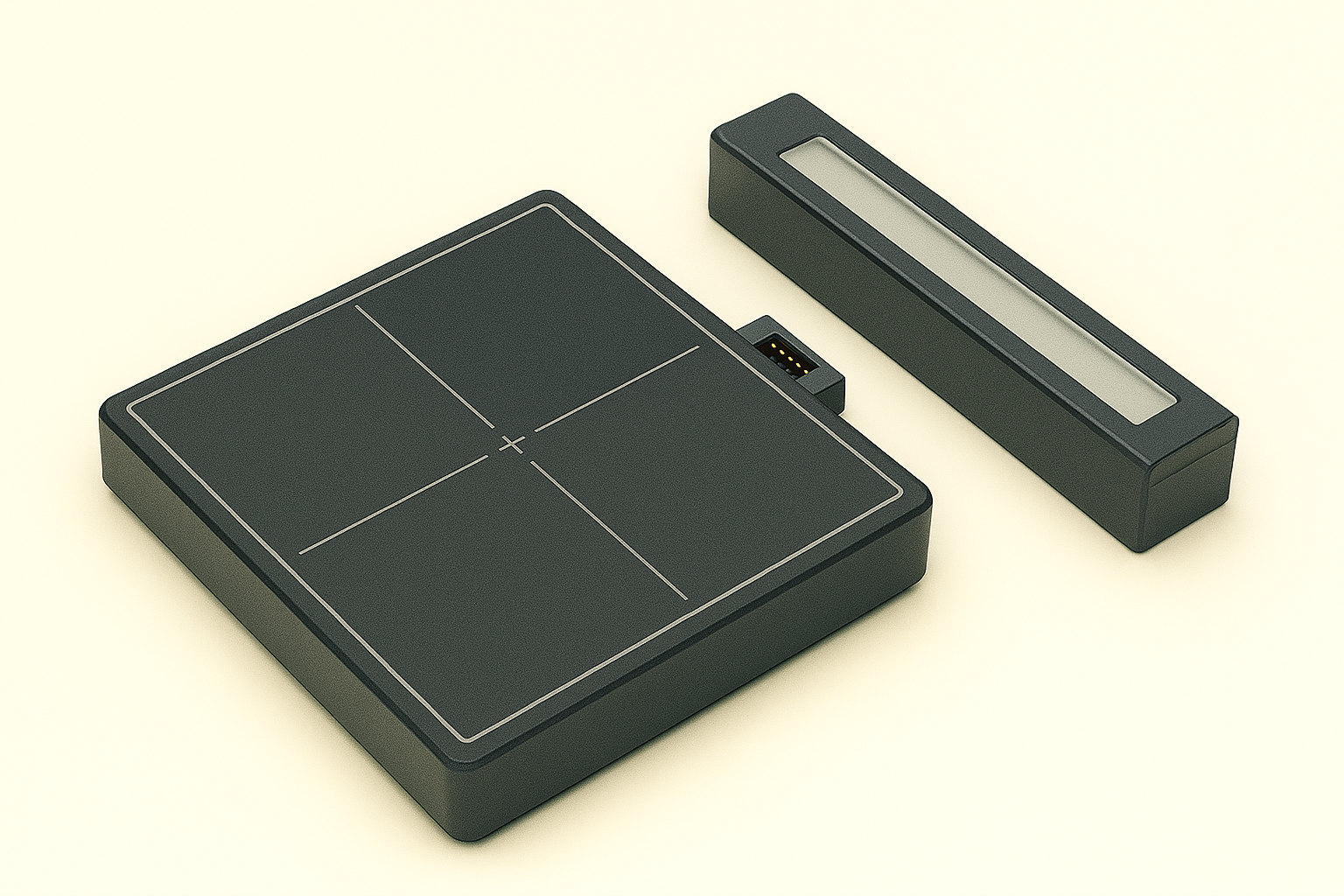
High frame rate and high sensitivity; suitable for production lines.
Effectively differentiates between muscle and bone densities; suitable for multi energy imaging.
Limitation: Very high cost typically over three times the price of conventional detectors.
Best for high value products such as premium fruits or high end seafood.
AI Contour and Feature Recognition3

Widely adopted in recent years.
Performs shape recognition, absorption differentiation, and fast screening directly on 2D images.
Easily integrated into existing equipment and production lines.
Challenges: Requires large amounts of training data; prone to misclassification due to stereological overlap; training and deployment cost increases with product diversity.
Image Enhancement and Imaging Parameter Optimization
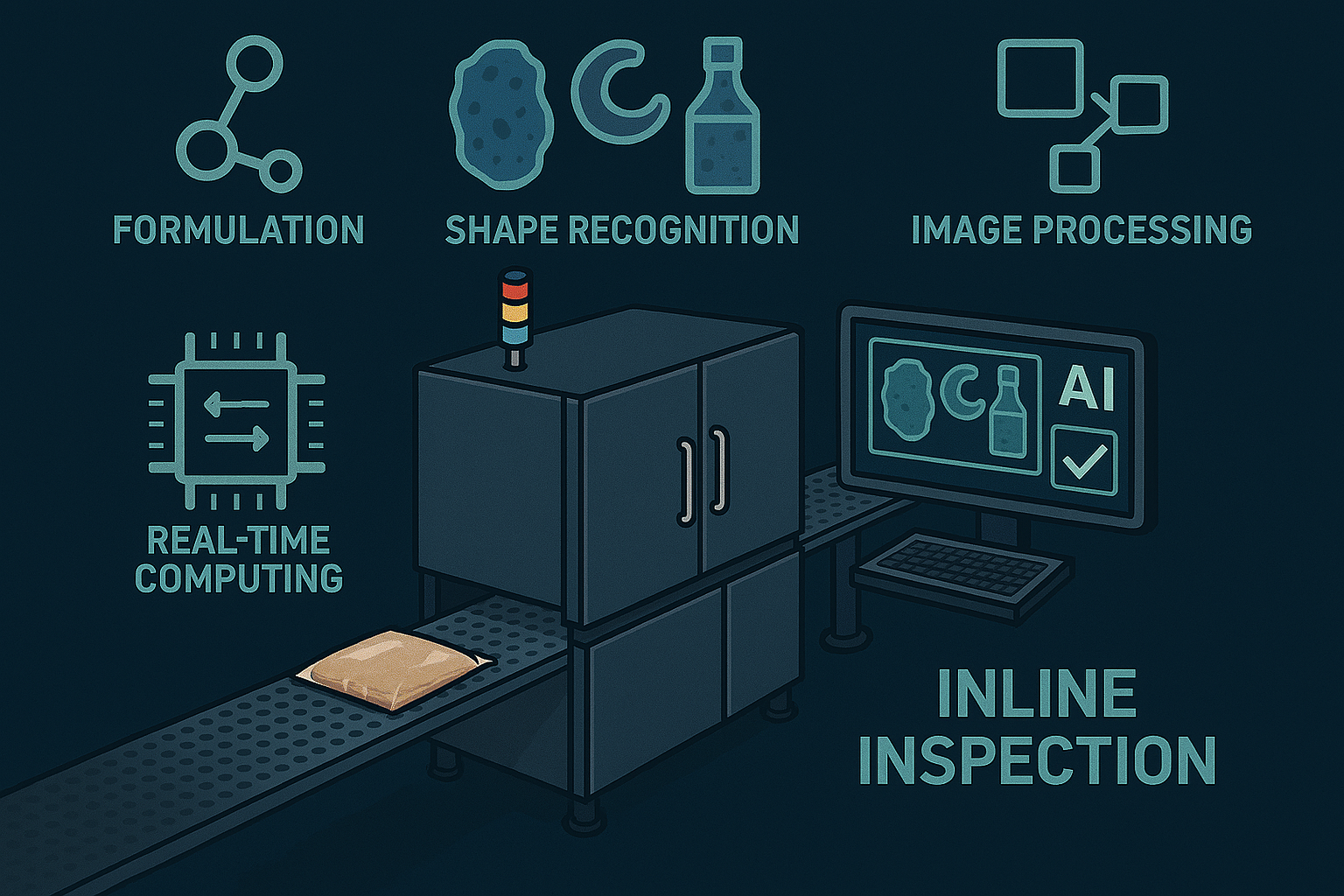
This remains the fastest and most cost effective approach.
Enhancing front end imaging parameters and scan configurations.
Applying post processing to strengthen bone type contrast.
Using physical filters, specific target materials, high speed high resolution imaging, multi energy imaging.
Applying edge enhancement, automated shape recognition, and multi energy density separation.
This combination separates bone, muscle, and packaging materials for screening and statistical analysis providing the best balance between cost, speed, and quality.
Recommended Detection Solutions for Different Scenarios
A.
High Performance Production Line(2D X ray + Multi Energy Imaging + Enhanced Processing + AI Screening)
Much lower cost than PCD and CT
Suitable for high speed production
Detects bones, rubber, glass, and other low density materials
Ideal for medium to large food factories seeking balanced cost and performance.
B.
High Sensitivity Production Line(PCD + Spectral Analysis)
Best performance for tiny bone fragments and low density objects
High frame rate for fast production
Suitable for premium food brands requiring extremely high detection rates.
C.
High Precision Sampling(CT Equipment & Imaging)
Used for high value products with zero tolerance for foreign objects
Ideal for laboratories, certification processes, or offline sampling not suitable for continuous production lines.
D.
AI Enhanced Solution(Upgrading Existing X ray Systems + AI Post Processing)
Suitable for small to medium factories
Supports external AI models to reduce development cost
Most cost effective and scalable solution.
For different product types, production workflows, and combinations with traditional optical inspection, we can provide tailored solutions to meet your needs. If you have any questions regarding the technologies discussed above, you are welcome to contact us at any time.
1 Nondestructive internal quality inspection of pear fruit by X-ray CT using machine learning, Food Control, Volume 113, 2020, 107170, ISSN 0956-7135,
2 Improving Contaminant Detection with Dual Energy X-ray and Photon Counting:https://instrumentation.co.uk/x-ray-and-photon-counting/
3 Improving Efficiencies for Food Processors and Packhouses with AI:https://www.apfoodonline.com/industry/improving-efficiencies-for-food-processors-and-packhouses-with-ai/